- Websiteaktionen > Websiteeinstellungen
- Websiteverwaltung > Inhalt und Struktur
- Dokumentenbibliothek auswählen
- Ansicht ändern auf "Für mich ausgecheckt"
- Files auswählen (Checkbox)
- Aktionen > einchecken
Sunday, September 8, 2013
Sharepoint Check-in von vielen Dokumenten
Wer z.B. via Windows Explorer mehrere Dokumente in eine Dokumentenbibliothek hoch lädt wird unter Umständen vor der Herausforderung stehen, diese auch alle einchecken zu müssen, damit sie für die Kollegen sichtbar sind. In der folgenden Anleitung wird beschrieben, wie das geht:

Tuesday, September 3, 2013
Email senden an Sharepoint Liste
Für verschiedene Szenarien kann es sinnvoll sein, dass Emails (z.B. an bestimmte Key-Accounts oder einen dedizierten Emailverteiler) auch in einer Sharepointliste vorgehalten und gespeichert werden. So ist jeder Mitarbeiter über den aktuellen Status informiert, wenn er die Liste abonniert. Prinzipiell lässt sich die Emailfunktion einfach einrichten unter Listeneinstellungen > Kommunikation > Einstellungen
für eingehende E-Mail > Eingehende Email. Allerdings bringt nicht jede Liste die Funktionalität für den Empfang von Emails mit.
Listen mit E-Mail-Fähigkeit (engl.)
Listen ohne E-Mail-Fähigkeit:
Listen mit E-Mail-Fähigkeit (engl.)
- Announcements
- Blog Posts
- Calendar
- Discussion Board
- Document Library
- Form Library
- Picture Library
Listen ohne E-Mail-Fähigkeit:
- Contacts
- Custom List
- Issue Tracking
- Links
- Objectives
- Project Tasks
- Survey
- Tasks
- Wiki Page Library
Sunday, July 28, 2013
Projektmanagementframework
Überall Projekte!
In meiner beruflichen Laufbahn bin ich immer wieder auf Projekte gestoßen. Ich habe dabei gelernt, dass es gut ist, Aktivitäten, "größere Todos", komplexe Arbeitspakete und sonstige Tätigkeiten beim Namen zu nennen. Viele davon sind nämlich genau das: Projekte.
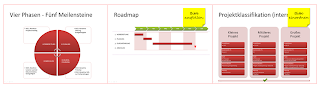
Für mich selber - und später auch für meine Mitarbeiter - habe ich für interne (meist IT) Projekte ein Framework erstellt. Es ist eine Zusammenfassung meiner Erfahrungen bei Projekten und insbesondere dann geeignet, wenn man mit dem Projekt (oder Projektmanagement) noch ganz am Anfang steht.
Ziel des Projektmanagementframeworks:
In meiner beruflichen Laufbahn bin ich immer wieder auf Projekte gestoßen. Ich habe dabei gelernt, dass es gut ist, Aktivitäten, "größere Todos", komplexe Arbeitspakete und sonstige Tätigkeiten beim Namen zu nennen. Viele davon sind nämlich genau das: Projekte.
Für mich selber - und später auch für meine Mitarbeiter - habe ich für interne (meist IT) Projekte ein Framework erstellt. Es ist eine Zusammenfassung meiner Erfahrungen bei Projekten und insbesondere dann geeignet, wenn man mit dem Projekt (oder Projektmanagement) noch ganz am Anfang steht.
Ziel des Projektmanagementframeworks:
- Vereinheitlichung von Projektvorgehen (intern)
- Best Practices etablieren und Projektverantwortliche unterstützen, die kein fundiertes IT-Projektmanagementwissen haben
- Vergleichbarkeit der Projekte durch einheitliche Meilensteine schaffen

Subscribe to:
Posts (Atom)